

The word “funnel” gets used so often in marketing that it starts to sound like jargon. It is a very plain idea. Out of everyone who could buy from you, fewer notice you, fewer again get in touch, and fewer still become customers. The funnel is just the shape of that drop-off.
Let’s walk through it with an example we know well: a door installation and repair company in the GTA. The stages are the same for a dental clinic in Mississauga or a software firm in Waterloo. Only the details change.
Contents6 sections
The four stages, in plain language
- Someone notices you: a Google result, a Maps listing, a neighbour’s recommendation, an ad between two Instagram stories.
- They check you out: service pages, prices, reviews, photos of past jobs.
- They get in touch: a call, a form, a message, a booking.
- They buy, and with luck come back or send a friend.
Each stage has a different job. The first is about being visible to the right people. The second is about answering questions before they are asked. The third is about making contact effortless. The fourth is about delivering well enough that the funnel starts refilling itself.
For the door company, a typical path looks like this: a homeowner in Markham searches for patio door repair, lands on a page about exactly that, sees a price range and three reviews from nearby streets, taps the call button and books a visit for Thursday.
What to measure at each stage
| Stage | What to measure | A healthy sign |
|---|---|---|
| Notice | Impressions, clicks, Maps views | Growth from relevant searches, not random traffic |
| Consider | Service page views, time on page | Visitors reach prices, reviews and photos |
| Contact | Calls and forms per 100 visitors | Rising month over month |
| Buy | Share of leads that book, average job value | Most qualified leads get a quote within a day |
| Return | Reviews, repeat jobs, referrals | Reviews grow as fast as jobs do |
You do not need all of these on day one. Start with visitors, enquiries and jobs. Those three numbers alone will point to the weakest stage.
How to find the stage that leaks
Say a site gets 2,000 visitors a month, 40 of them get in touch and 10 become paying jobs. That is 2 enquiries per 100 visitors and 1 job for every 4 enquiries. Now compare with last quarter, or with what similar businesses see, and ask which ratio looks weakest.
If very few visitors get in touch, the problem lives on the website or in the offer. If plenty get in touch but few book, look at response time, the quote itself and pricing. If people book but never come back or review, look at the experience after the job.
What fixing the funnel looked like for a door company
Reliance Doorsmith offers more than thirty services across Toronto and the GTA. The old problem was simple to describe: a long list of services on one page, so visitors searching for one specific repair had to dig.
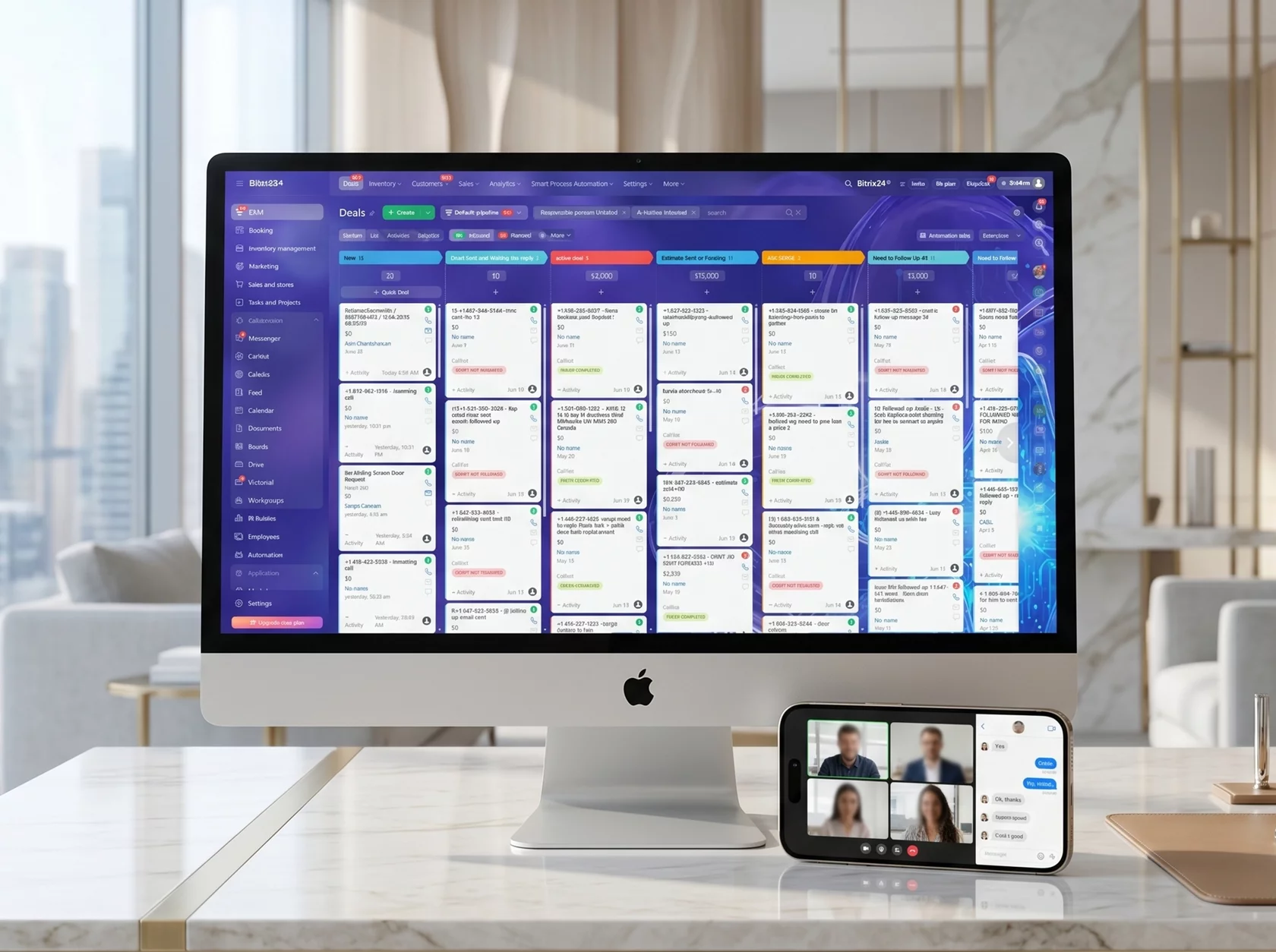
The rebuilt funnel works stage by stage. Search campaigns are split by city and service, so the ad matches what was typed. Each service has its own page with upfront pricing and a quote form on every screen. Calls run through a cloud phone system, and every enquiry lands in one CRM pipeline. You can read how each piece was built in the Google Ads case and the CRM case.
The stage most businesses forget
The bottom of the funnel is where the next customers come from. A happy customer who leaves a Google review with a photo does more for the top of your funnel than most ads.
- Ask for a review within a day of finishing the job, with a direct link.
- Send a maintenance reminder or seasonal check-in when it genuinely helps.
- Thank people who refer others, and make referring easy.
- Keep consent records for any follow-up emails, as CASL requires.
Draw yours this week
Take a sheet of paper and write the four stages across it. Under each, list how customers move through it today and the number you have for it, even if it is a rough guess. Circle the stage with the worst ratio. That is where your next dollar or hour should go.
If you want a second pair of eyes, our team maps funnels like this as part of every monthly marketing plan, and the conversion optimization work usually starts with the weakest stage.