
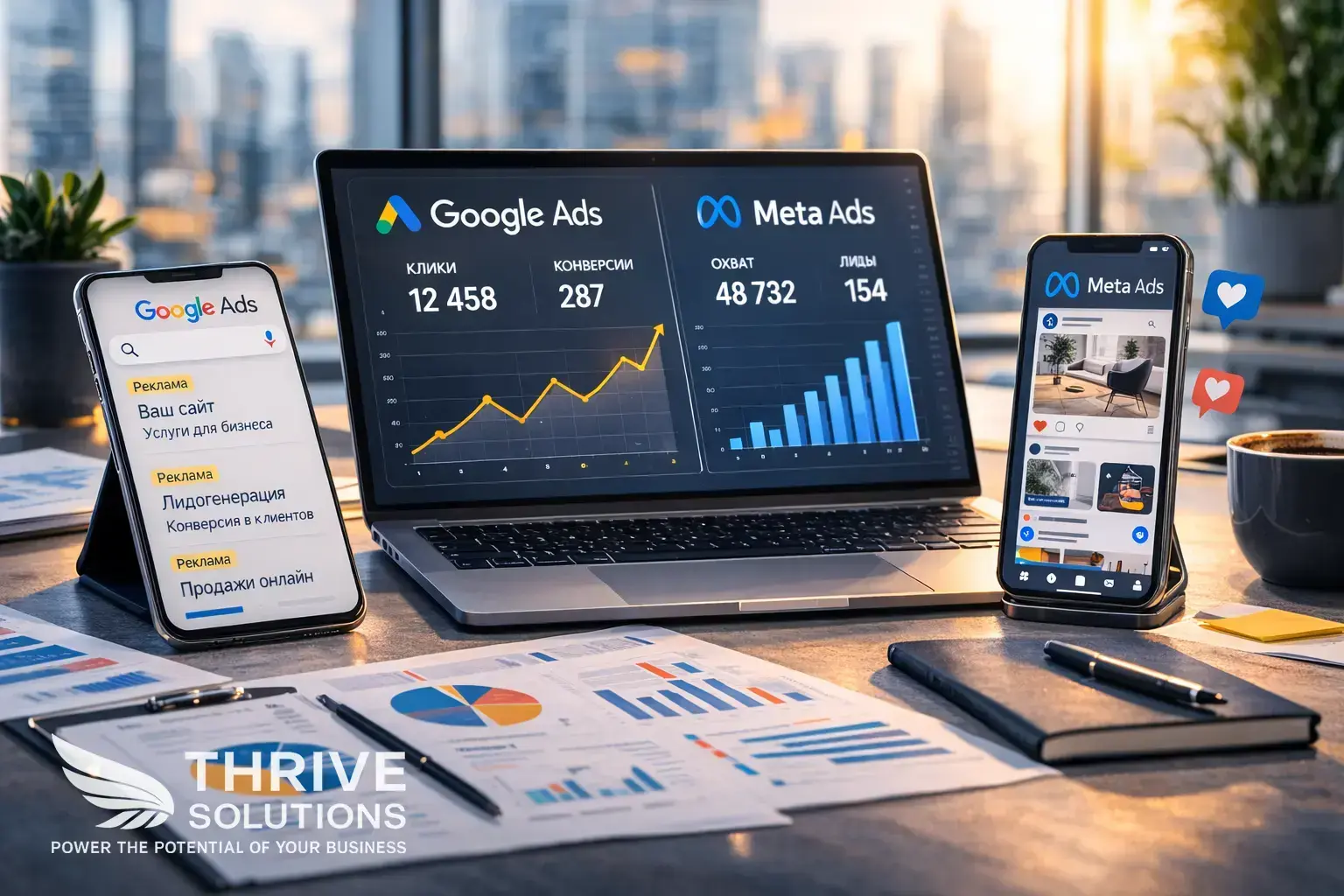
It is the advertising question we hear most often, usually phrased as “which one works better?”. The honest answer is that they do different jobs. Asking which is better is a bit like asking whether a storefront or a billboard is better. It depends on what you need.
Here is how the two compare for Canadian businesses, and how we decide where the first dollar should go.
Contents6 sections
Catching demand versus creating it
Google Search ads appear when someone types a need: “water heater repair Oshawa”, “accountant for contractors Toronto”. The person already has a problem and is choosing who solves it. Your job is to be the obvious answer.
Meta ads, on Facebook and Instagram, appear while people are doing something else: scrolling, catching up, killing time. Nobody asked for your ad. Your job is to interrupt with something relevant enough to make them stop, remember you, or act later.
Side by side
| Google Ads (Search) | Meta ads | |
|---|---|---|
| The person is | Actively looking for a solution | Scrolling, not looking yet |
| Targeting by | Keywords, location, time of day | Interests, demographics, lookalikes, past visitors |
| Strong formats | Text ads, calls, Maps | Images, video, carousels, lead forms |
| Cost per click | Usually higher | Usually lower |
| Intent | High | Lower, but easier to build interest |
| Works best for | Urgent and high-intent services | Visual offers, new products, retargeting |

When Google Ads should come first
If people already search for what you sell, start with Google. Emergency and urgent services, locksmiths, plumbers, movers, clinics, lawyers and most B2B services with clear search terms all belong here. You pay more per click, but each click comes from someone with a real need, often ready to call today.
When Meta ads should come first
If few people search for your product yet, or it sells on looks and feelings, Meta is often the better start. New products, restaurants, events, fitness and beauty studios, home decor and anything highly visual can do well. Meta is also the natural home of retargeting: showing a reminder to people who visited your website and did not get in touch.
Using both together
For many businesses the answer becomes both, with different jobs. Google captures people who are searching now. Meta retargets the visitors who were not ready, and builds familiarity with the local audience so that when they do search, your name feels known.
Google harvests demand. Meta plants it. Most growing businesses need a little of both.
Start where your customers are most likely to be ready to buy, prove the numbers, then add the second channel with its own budget and goal.
A few Canadian specifics
- If you serve Quebec, run French ads and French landing pages, not translated afterthoughts.
- The news restrictions on Facebook and Instagram in Canada affect news content, not regular business ads.
- Retargeting relies on tracking consent, which is stricter for visitors in Quebec under Law 25.
- If lead forms add people to an email list, the consent wording must meet CASL.
If you would like a recommendation for your own business, our Google and Meta Ads team will look at your market and suggest where the first budget should go.